A Tim Hortons Iced Capp contains 220 to 600 calories, depending on size and flavor. A small runs about 220-350 calories, a medium 300-430, and a large 390-600. Flavored versions add roughly 30-60 calories, and ordering with milk instead of cream saves 80-150 calories.
Three weeks into training for a half marathon, I hit a wall. Not a physical one. My mileage kept climbing, I was eating “clean” for the most part, and the scale just… wasn’t moving the way my coach promised it would. So I did the thing I’d been putting off for months. Wrote down absolutely everything that passed my lips for seven straight days. No skipping the “little” stuff.
That’s where I found it — sitting right there in my afternoon log, day after day. A medium Iced Capp from Tim Hortons across from my office. I grabbed one almost every day on the walk back from lunch, telling myself it was “just a coffee.” It wasn’t.
It was quietly eating back almost half of what I’d burned on my longer runs. That’s the moment I stopped guessing and actually sat down to work out what each version of this thing was costing me. Every size. Every flavor. Cream versus milk.
What followed was a few weeks of being That Person at the counter, asking one too many questions before ordering, cross-referencing numbers from a calorie counter on my phone while sitting in the drive-thru line. A simple coffee run turned into a small research project. I’ll save you the trouble.
Why It Fooled Me for So Long
The Iced Capp doesn’t look like a calorie bomb. It looks like a coffee drink, so I’d filled it in the same mental bucket as an americano or a cold brew — things that barely register on a tracking app.
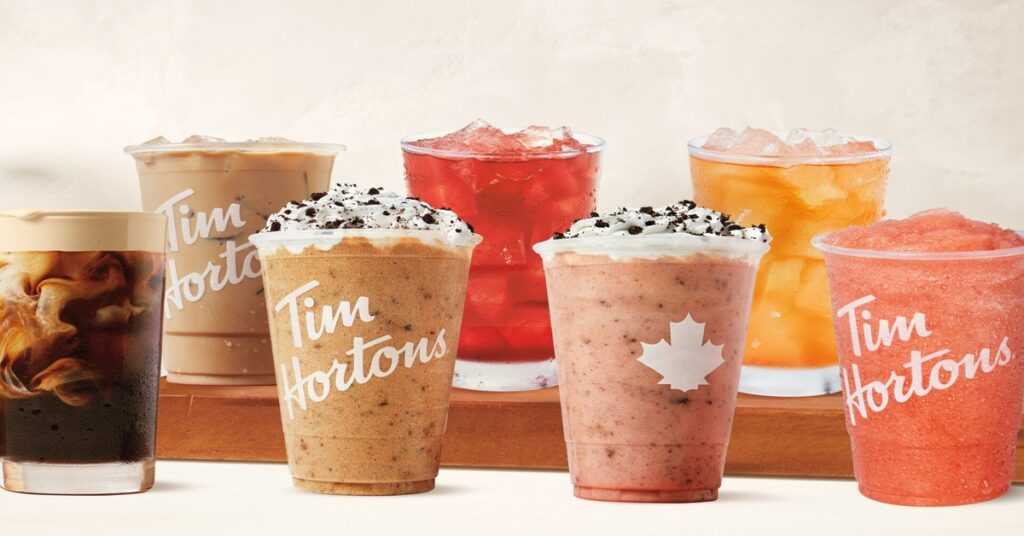
What I hadn’t accounted for: this isn’t brewed coffee with ice thrown in. It’s a coffee concentrate blended with ice into a thick slush, then finished with a swirl of cream. Texture-wise it’s closer to a milkshake. The calorie count follows that logic, not the “it’s just coffee” logic I’d been running on.
There’s a psychological thing going on with the cup too. Served in the same style as iced coffee and cold brew, so my brain slotted it under “light drink” based on packaging alone, not contents.
It wasn’t until I pictured the actual blending process — coffee mix, ice, real cream, whipped into something with the consistency of soft-serve — that the higher numbers stopped feeling like an app glitch.
I asked one of the baristas how she’d describe it to someone who’d never had one. Half expecting “iced coffee, but colder.” Instead: “a coffee milkshake, basically,” no hesitation at all. That line probably should’ve been on the bagel menu the whole time.
It also didn’t help that I was ordering on autopilot most afternoons. Same time, same counter, same three words: “medium Iced Capp.” There was no moment of decision-making involved, which meant there was no moment where a calorie count could have crossed my mind even if I’d wanted it to. Habit had completely replaced choice.
Looking back, that’s probably the single biggest reason this drink slipped past my radar for as long as it did — not ignorance about what was in the cup, but the simple fact that I’d stopped thinking about it as food at all.
Breaking Down Each Size
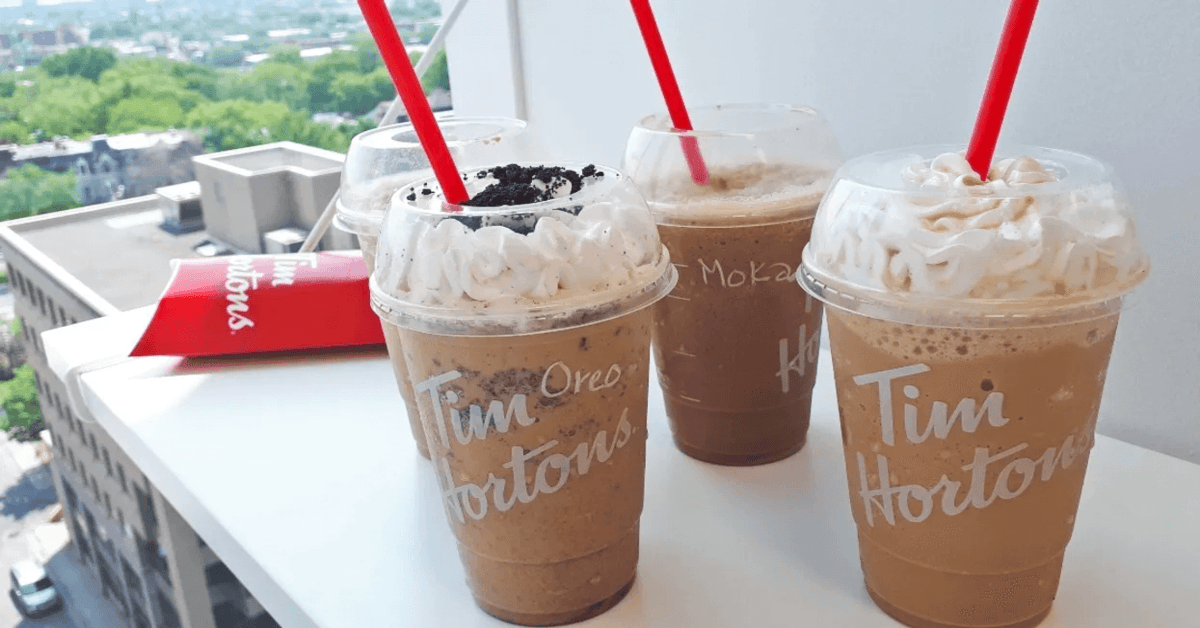
I compared several nutrition databases while building out my log entries, and the numbers weren’t identical across sources. Makes sense once you realize Tim Hortons locations in Canada and the US don’t always run the same recipe or portion size.
So instead of pretending there’s one correct number, here’s the realistic range I landed on for the standard “with cream” version — what most people get by default:
Small: approximately 220 to 350 calories Medium: approximately 300 to 430 calories Large: approximately 390 to 600 calories
I logged my medium at the higher end just to be safe, since my local store tends to go heavy on the cream swirl. A habit worth stealing — when in doubt, log the higher number rather than the lower one. You’ll rarely regret overestimating a sugary donut. You’ll definitely regret underestimating one.
Worth noting: these ranges assume standard sweetness. Ask for less sugar, or no added sugar, and the number shifts down a bit — though the drink gets sweetened during blending, not stirred in after like a regular coffee.
That tripped me up early. Asking for “no sugar” on an Iced Capp doesn’t quite work the same way, since some sweetness is baked right into the concentrate mix, and not every location handles the request the same way.
I also learned the hard way that “medium” isn’t a fixed unit of measurement across every location I visited. Two Tim Hortons about fifteen minutes apart from each other, both convenient enough that I’d rotate between them depending on my route that day, seemed to pour noticeably different amounts of cream into what was nominally the same size cup.
I never got precise enough with it to prove anything scientifically, but enough of a pattern showed up in how full or how thick each cup felt that I started mentally rounding up whenever I ordered from the location that seemed heavier-handed with the swirl.
Where the Flavored Versions Land
Once curiosity got the better of me, I started logging the flavored options too. Vanilla, mocha, and caramel Iced Capps all sit above the Original at the same size — generally 30 to 60 additional calories — because of the syrup pump added during blending.
Depending on the season you might run into a limited-time flavor. I’ve seen pumpkin spice and a couple of holiday specials over the years, and they tend to follow the same pattern: a modest bump, not a dramatic one.
The real jump happens at large. A large flavored Iced Capp showed up in some of my sources north of 600 calories, occasionally closer to 650 once you factor in the syrup, the cream, and a bigger ice-to-mix ratio at that size.
I logged a large caramel on a rest day, figuring it wouldn’t be far off my usual medium. Went back and double-checked the number afterward, assuming I’d mistyped something. Hadn’t. It was just that much more.
One more thing worth flagging: the French Vanilla mix-up. Tim Hortons runs a French Vanilla hot-and-iced coffee line that’s a totally different product from the Vanilla Iced Capp, even though the names sound nearly identical and rattled off quickly at the counter.
The French Vanilla coffee drinks run lower in calories than the Iced Capp lineup, since they’re not built on that same thick, blended base. Want a vanilla-flavored cold drink without the calorie hit? That’s the direction to go — not the Vanilla Iced Capp, even if the names on the menu board make them sound like close cousins.
I mixed this one up myself in week one, ordering what I thought was going to be my usual base drink with a light vanilla twist, only to realize afterward from the receipt that I’d been handed something from an entirely different part of the menu.
The flavors weren’t wildly different to the tongue, which is exactly why the mistake was so easy to make and so easy to repeat without noticing.
If you’re the type who orders by habit rather than by carefully reading the board every time, it’s worth double-checking which line you’re actually in before you commit to the same order for a whole training block.
The One Change That Actually Moved My Numbers
Around week two, I asked a barista what would happen if I ordered mine “with milk” instead of cream. Common request, apparently — she rang it up without blinking. The difference in my logged calories was real: somewhere in the range of 80 to 150 fewer calories, depending on size, from that one swap alone.
Taste-wise it’s a touch less rich, but still has the iced, blended texture I actually go there for. Of everything I changed that training block, this was the swap that cost zero willpower. No talking myself out of a craving, no white-knuckling. Just one different word in my order.
I also tried the sugar-free version, mostly out of thoroughness. Didn’t love the aftertaste enough to make it a regular thing — but if you’re managing blood sugar rather than just total calories, it’s worth trying once.
Uses an artificial sweetener in place of regular sugar. A couple of coworkers I mentioned actually preferred it, so this one’s more of a toss-up than the milk swap.
There’s a smaller swap I stumbled into almost by accident that’s worth mentioning too: asking for less blend time, or what one barista called “a firmer pour.” It doesn’t change the calorie count on paper, since the ingredients going into the cup stay the same, but it does change how quickly I drank it, and how satisfied I felt afterward.
A thicker, slower-melting Iced Capp took longer to finish than a thinner one, which meant it felt more like an actual snack and less like something I absentmindedly sipped through in five minutes flat. Not a calorie hack exactly, more of a satisfaction hack, but it ended up mattering just as much for how the drink fit into my day.
Size Isn’t a Simple Multiplier
Here’s something I noticed logging multiple sizes over a few weeks: the calorie jump from medium to large is often bigger than the jump from small to medium.
I’d assumed sizes scaled evenly, the way most drinks do. They don’t, not consistently, at least not at every location. Practically, that means sticking with small or medium gets you a much better calorie-to-satisfaction ratio than treating large as just “a bit more of the same drink.”
I tested this unscientifically — ordered a small and a large on two days that felt about equally hungry and thirsty, just to compare how satisfied I felt afterward.
The large size didn’t leave me noticeably more satisfied once the “it’s bigger” novelty wore off. Enough to convince me those extra calories weren’t buying much.
Part of what’s going on, I think, is that the cup itself does a lot of the psychological work. A large in hand just feels like an event, like something you’re supposed to nurse and enjoy slowly, which nudges you toward drinking the whole thing regardless of whether your actual thirst or craving matched that volume in the first place.
A small, by contrast, disappears fast enough that there’s less temptation to treat it as an occasion. It’s a small thing, but it changed how I thought about ordering on days when I was really just after the ritual of the walk and the caffeine, not an oversized treat.
Caffeine Is a Different Story Than Calories
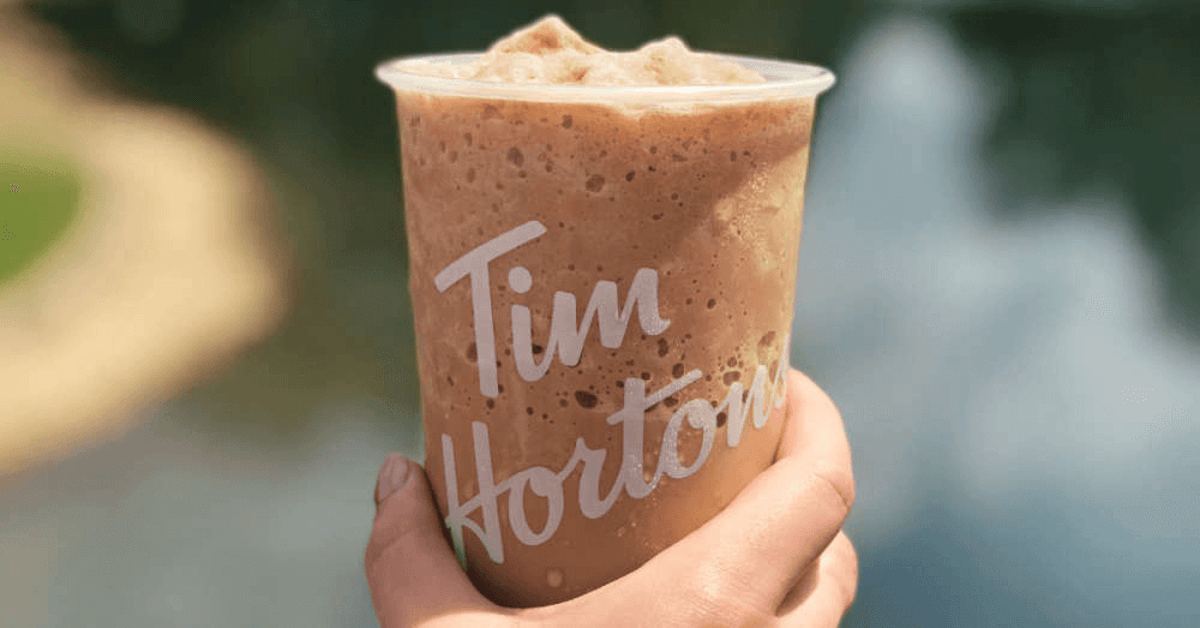
Here’s what surprised me: caffeine content doesn’t scale with calories the way you’d expect. Since the coffee concentrate mix is the base regardless of size, the caffeine bump between sizes tends to be smaller than the calorie bump.
Meaning a small Iced Capp isn’t dramatically less caffeinated than a large one, even though it’s dramatically lower in calories. Good news if you’re chasing caffeine and just tolerating the calories as a side effect — you can size down without giving up much of the energy boost.
A lot of people assume bigger automatically means proportionally more caffeine, same as calories. Treating those as separate variables changed how I thought about sizing down on days I wanted the pick-me-up without the full calorie hit.
This distinction ended up being the most useful single thing I took away from the whole exercise, more than any individual calorie number. Once I separated “how much energy do I need right now” from “how much drink do I feel like having,” ordering got a lot simpler.
Most afternoons, it turned out, I genuinely only wanted the caffeine and the ritual of the walk — the size of the cup in my hand was mostly incidental. Realizing that let me size down without feeling like I was settling for less.
What My Weekly Log Actually Looked Like
By the end of that block, here’s roughly how ordering shook out, based on weeks of actually paying attention.
Normal training day, still wanting the afternoon ritual: small with milk instead of cream. Kept the routine intact without eating into my budget. After a couple weeks I barely noticed a taste difference — it just became the order.
Long run days, when I’d genuinely earned some slack: medium Original with cream, no swaps, no second-guessing. Wasn’t tracking closely on those days anyway; the long run changes the math enough that one drink isn’t derailing anything.
Weeks I was tracking tightly — the week before a race, say — I skipped it and had black iced coffee instead. Barely registers on a log by comparison. Not the same drink, won’t pretend the craving vanished, but it got me through the stricter stretches without feeling deprived enough to overcorrect later.
And on the rare occasion my training partner and I split something after a long run — one large Original, split two ways. Still felt like a full portion each, thanks to how thick the drink is. Became a nice little ritual that didn’t blow up either of our numbers the way two separate mediums would’ve.
Looking at those four patterns side by side afterward, what struck me was how little the actual drink changed week to week, and how much the context around it did. The order itself was almost never the variable.
It was always what kind of day surrounded it — how hard I’d trained, how close a race was, whether I had someone to split with — that decided which version made sense. That’s probably a more useful takeaway than any single calorie figure: match the order to the day, not the day to some fixed rule about the order.
The Habits That Threw My Numbers Off Early On
Looking back at week one, before I understood any of this, a few habits kept skewing my numbers higher than expected. Worth calling out.
Accepting “extra cream swirl” whenever baristas offered it — not realizing that’s an additional pour on top of what’s already blended in. A real addition to volume and calorie count, not just a cosmetic flourish.
Assuming the flavor in a vanilla or caramel Iced Capp was baked into the base mix rather than an added syrup pump. Easy mistake, since it tastes fully integrated. But it moves the calorie math meaningfully at larger sizes, where more pumps get used.
Logging “small” using a generic default entry a few times, not realizing this chain’s small runs higher, calorie for calorie, than a small most other places. Comparing across chains by size label alone is a bad habit — “small” doesn’t mean the same portion everywhere.
And more than once, ordering a second one on a hot day without mentally counting it as “another full log entry,” the way I would’ve with a snack. It didn’t feel like food in my head. It was, obviously, food.
A fifth habit I’ll admit to, mostly out of embarrassment: rounding down whenever a number feels inconvenient. If a source said 430 and I was hoping for 350, I’d quietly split the difference in my head and log something in between, without any real justification for doing so beyond wanting the number to be smaller.
It’s a natural thing to do, and I don’t think it was intentional dishonesty so much as wishful thinking, but it meant my early logs understated things more than I realized until I forced myself to always use the higher end of any range I found, no exceptions, no case-by-case negotiating with myself.
How It Actually Compares to Other Cold Drinks
Putting the Iced Capp side by side with other cold drinks I’d order without a second thought is what really made this click. A plain iced coffee with a splash of milk usually lands somewhere in the double digits to low hundreds — nowhere close to what an Iced Capp brings to the table.
A blended drink from a competing chain in a comparable size lands in a similar range, sometimes higher, depending on specifics. Which told me this isn’t a “Tim Hortons problem” so much as a “blended, cream-based drinks are just inherently higher calorie” reality across the whole category.
That comparison helped me stop feeling singled out and start thinking about the category as a whole. Any drink built by blending cream and sugar with ice lands in a similar neighborhood, whoever’s making it. Less about avoiding one menu item, more about being aware of the style of drink and how often it fits into a given week.
It also reframed how I thought about substitutions generally. Instead of treating “cut out the Iced Capp” as the goal, I started treating “know which category a drink belongs to before ordering it” as the actual skill worth building.
That lens carried over well beyond coffee runs — into how I looked at smoothies, milkshakes, and even some of the heavier seasonal drinks that show up at other chains every fall and winter.
Once you can spot “blended, cream-based” as its own category with its own baseline calorie range, you stop being surprised by any individual drink inside it.
Where That Left Me
I never gave up the Iced Capp entirely — that was never really the goal. What changed is I stopped treating it like a rounding error and started treating it like what it is: a real menu item with real calories, adding up the same way a handful of timbits or dessert would.
Once that was built into the training plan instead of ignored, the scale actually started moving the way my coach promised. Afternoon energy dips got a bit more manageable too, once I wasn’t riding the sugar spike and crash from the full-cream version every single day.
Still stop at that same Tim Hortons most weeks. Just order with a little more intention now, and I’ve stopped being surprised by what shows up in the log afterward.
If you’re somewhere in the middle of figuring this drink out the way I was a few months back — that’s the whole takeaway. Not about cutting it out. About knowing what’s actually in the cup before deciding how often it belongs in your week.
If there’s one closing thought worth leaving you with, it’s this: the drink itself never changed over the course of that training block. Same concentrate, same swirl of cream, same cup design at the counter.
What changed was how much attention I was paying to it, and that turned out to matter far more than any single tweak to size or flavor. Whatever you order next time you’re at the counter, the log is a lot more useful than the guess.
FAQs
1. How many calories are in a Tim Hortons Iced Capp?
A regular Tim Hortons Iced Capp ranges from about 220–350 calories for a small up to 390–600 calories for a large, depending on size and location. The “with cream” version sold by default sits at the higher end of each range.
2. Is a Tim Hortons Iced Capp unhealthy?
An Iced Capp isn’t inherently “unhealthy,” but it’s closer to a milkshake than a coffee — it’s a blended coffee concentrate finished with cream, so it carries calories similar to other cream-and-sugar blended drinks rather than a plain iced coffee.
3. How many calories does ordering an Iced Capp with milk instead of cream save?
Swapping cream for milk in a Tim Hortons Iced Capp typically saves 80–150 calories, depending on size. It’s one of the easiest changes to make since it doesn’t affect the iced, blended texture much.
4. Does a large Iced Capp have more caffeine than a small one?
Not by much. Because all sizes use the same coffee concentrate base, caffeine content scales far less than calories do — a small Iced Capp isn’t dramatically lower in caffeine than a large, even though it’s much lower in calories.
5. What’s the difference between a Vanilla Iced Capp and Tim Hortons French Vanilla coffee?
They’re different products despite the similar name. The Vanilla Iced Capp is the thick, blended Iced Capp base with vanilla syrup added, while French Vanilla is a separate hot-and-iced coffee line that isn’t blended and runs noticeably lower in calories.