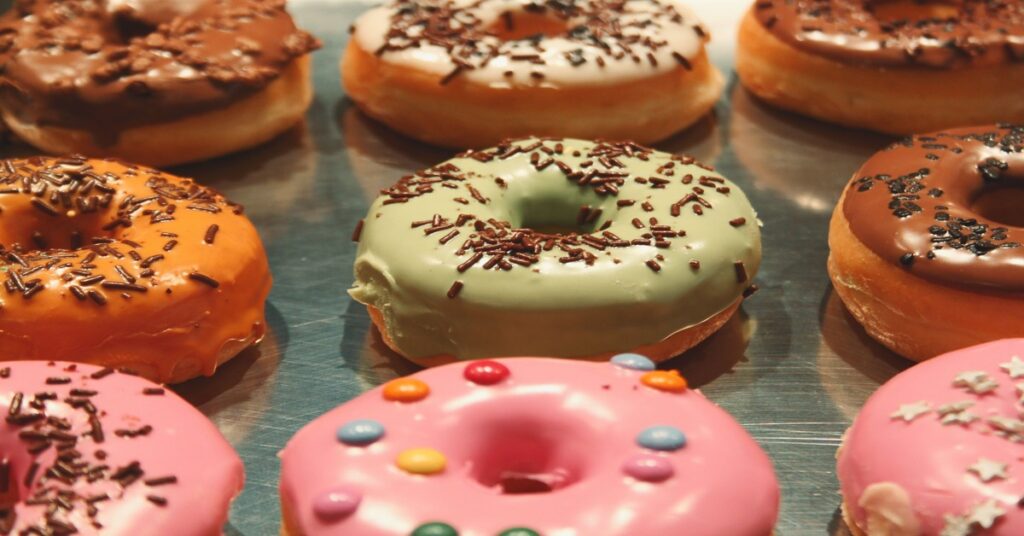
Tim Hortons donuts range from about 210 calories (plain donut) up to 400 calories (loaded specialty/seasonal donuts). Classic glazed donuts sit around 260–320 calories, filled donuts around 280–330 calories, and Timbits run 35–60 calories each — though a box of 10 can add up to 400–500 calories total.
Sitting in a Tim Hortons drive-thru line with a craving for something sweet is one of those small, familiar joys that a lot of people share on their way to work, school, or just a quiet morning out.
The smell of fresh coffee, the tray of donuts behind the glass, the little decision-making moment at the counter — it all feels routine until someone asks a simple question: “How many calories am I actually eating right now?” That question is exactly what this guide answers, donut by donut, in plain language that anyone can follow.
This article was put together after actually visiting a Tim Hortons location, picking up a variety box of donuts, checking official nutrition information, and comparing it against real packaging and in-store menu boards.
The goal is not just to throw numbers on a page but to explain what those numbers mean in everyday terms, so the next trip to Tim Hortons feels a little more informed and a lot less guilty.
Why Calorie Counts Matter More Than People Think
Most people don’t walk into Tim Hortons planning to count calories. It’s usually a quick stop, a habit, or a reward after a long shift. But calorie awareness matters for a few practical reasons that go beyond dieting.
First, portion sizes at donut chains have grown over the decades. A donut that looks “average” today might carry more sugar and fat than a donut from twenty years ago.
Second, many people eat more than one item in a single visit — a donut with a coffee that has cream and sugar, or a donut alongside a breakfast sandwich — and those numbers stack up fast without anyone noticing.
Third, understanding calories helps with blood sugar management, which matters a lot for people managing diabetes or simply trying to avoid the mid-afternoon energy crash that follows a sugar-heavy breakfast.
None of this means donuts are bad or should be avoided completely. It simply means that knowing the numbers puts the choice back in the hands of the person eating, rather than leaving it up to guesswork.
How Tim Hortons Donuts Are Generally Categorized
Before diving into the calorie breakdown, it helps to understand how the Tim Hortons donut menu is typically organized. Based on in-store observation and the official nutrition guide, donuts usually fall into these groups:
- Classic donuts (glazed, plain, sour cream, old fashioned style)
- Filled donuts (jelly, custard, cream-filled varieties)
- Chocolate and iced donuts (chocolate glazed, honey dip, maple dip)
- Specialty and seasonal donuts (rotating flavors depending on the time of year)
- Timbits (the bite-sized donut holes Tim Hortons is famous for)
Each of these categories carries a fairly different calorie range, and understanding the category often gives a quick clue about roughly how many calories to expect, even before checking the exact number.
Full Calorie Breakdown by Donut Type
Here is where the real detail comes in. These numbers are based on standard nutrition information for a single, regular-sized donut. It’s worth noting that Tim Hortons occasionally adjusts recipes and portion sizes, and numbers can vary slightly by region, so treating these as a close, reliable estimate rather than an exact science is the smart approach.
Classic and Glazed Donuts
- Honey Dip Donut: roughly 260 calories. This is one of the most popular donuts on the menu, and it’s often the “safe choice” for people who want something sweet but not overly heavy.
- Old Fashioned Glazed Donut: around 320 calories, slightly denser than the honey dip because of its cake-style texture.
- Sour Cream Glazed Donut: approximately 300 calories, with a slightly tangier taste that balances the sweetness.
- Plain Donut: about 210 calories, making it one of the lowest-calorie donuts on the entire menu.
These classic options tend to sit in the 200 to 320 calorie range, which is noticeably lower than many of the filled and specialty donuts covered next.
Filled Donuts
These almost always carry more calories simply because of the added cream, custard, or jelly inside.
- Canadian Maple Donut: around 310 calories, filled with a light cream and topped with maple-flavored icing.
- Boston Cream Donut: approximately 330 calories, one of the richer options thanks to the custard filling and chocolate glaze on top.
- Jelly Filled Donut: roughly 290 calories, slightly lighter than cream-filled versions since fruit jelly tends to be lower in fat than dairy-based cream.
- Vanilla Dip Donut: about 280 calories, filled with a light vanilla-flavored cream.
Filled donuts generally land between 280 and 330 calories, making them a step up from the classic glazed options.
Chocolate and Iced Donuts
- Chocolate Glazed Donut: around 300 calories, a straightforward favorite for chocolate lovers.
- Double Chocolate Donut: approximately 350 calories, one of the higher-calorie standard donuts because of the chocolate cake base plus chocolate icing.
- Maple Dip Donut: roughly 260 calories, similar in calorie count to the honey dip but with a maple twist.
- Chocolate Dip Donut: about 270 calories.
This category tends to run from 260 to 350 calories, with double chocolate sitting at the top of the range.
Specialty and Seasonal Donuts
Specialty donuts rotate throughout the year and often include seasonal flavors like pumpkin spice in the fall or festive sprinkled versions around the holidays. These tend to be the highest-calorie donuts on the menu because of added toppings like icing drizzle, sprinkles, or filling combinations.
- Seasonal Specialty Donut (average): typically falls between 330 and 400 calories, depending on the specific topping and filling used.
- Sprinkle Donut: around 310 calories, mostly due to the added sugar in the sprinkle coating.
- Walnut Crunch Donut: approximately 340 calories, with the walnut topping adding both texture and extra calories.
Because specialty donuts change so often, checking the current in-store nutrition chart or an online calculator before ordering is genuinely the most reliable way to know exact numbers for whatever seasonal flavor happens to be available.
Timbits (Donut Holes)
Timbits are Tim Hortons’ bite-sized donut holes, and they’re often assumed to be a “lighter” choice simply because of their small size. That assumption is only partly true.
- Plain Timbit: around 35 to 40 calories each.
- Honey Dip Timbit: approximately 45 calories each.
- Chocolate Glazed Timbit: roughly 50 calories each.
- Sour Cream Timbit: about 50 calories each.
- Birthday Cake Timbit: around 60 calories each, one of the higher-calorie Timbit flavors due to added sprinkles and icing.
Here’s the catch that a lot of people miss: a standard box of 10 Timbits can easily add up to 400 to 500 calories total, which is often more than a single regular donut. It’s a classic case of small bites adding up quietly, especially when eaten straight from the box without really counting.
Comparing Donuts Side by Side
To make this easier to digest (no pun intended), here’s a simplified comparison based on general calorie ranges observed across the menu:
| Donut Category | Typical Calorie Range |
|---|---|
| Classic and Glazed | 210–320 calories |
| Filled Donuts | 280–330 calories |
| Chocolate and Iced | 260–350 calories |
| Specialty and Seasonal | 330–400 calories |
| Timbits (per piece) | 35–60 calories |
Looking at this table, a clear pattern emerges. Plain and classic donuts tend to be the lightest options, while specialty and seasonal donuts carry the highest calorie counts. Timbits, while small individually, can match or exceed a full donut’s calories if several are eaten in one sitting.
What Actually Adds the Extra Calories
Understanding why some donuts are higher in calories than others makes the whole topic much easier to reason about, rather than just memorizing numbers.
Fillings are one of the biggest factors. Cream and custard fillings, like those found in the Boston Cream or vanilla dip donuts, add both fat and sugar, which is why filled donuts tend to sit higher than plain glazed ones.
Toppings matter just as much. A donut with sprinkles, drizzle, or nut toppings will almost always carry more calories than the same base donut left plain. This is especially noticeable with specialty and seasonal donuts, where multiple toppings are often combined.
Base type plays a role too. Cake-style donuts, like the old fashioned glazed, tend to be denser and slightly higher in calories than yeast-based donuts like the honey dip, even when they look similar in size.
Size and shape can quietly affect numbers as well. Even within the same flavor, a slightly larger donut from one batch to another can shift the calorie count by a small margin, which is one reason official nutrition numbers are usually presented as close estimates rather than exact-to-the-gram figures.
How to Enjoy Tim Hortons Donuts Without the Calorie Guilt

None of this information is meant to scare anyone away from donuts. Food is meant to be enjoyed, and an occasional donut is a completely normal part of a balanced routine. That said, a few practical, real-world tips can help keep things balanced for anyone who’s watching their intake.
Pick one lower-calorie donut instead of grazing on Timbits. As shown earlier, a handful of Timbits can quietly add up to more calories than a single donut, so if the goal is portion control, one classic glazed donut is often the smarter choice over a bag of Timbits.
Pair donuts with a lighter drink. A donut alongside a coffee loaded with cream and sugar can easily double the total calorie count of the snack. Choosing black coffee or a lighter option alongside the donut keeps the overall total more reasonable.
Save specialty donuts for occasional treats. Since specialty and seasonal donuts tend to carry the highest calorie counts, treating them as an occasional indulgence rather than a daily habit makes a noticeable difference over time.
Split a donut when possible. This sounds simple, but sharing a donut with a friend or coworker, or simply eating half and saving the rest, is an easy way to enjoy the flavor without taking in the full calorie load.
Check the numbers before ordering, especially for seasonal items. Since seasonal flavors change often and their exact calorie counts aren’t always memorized by staff at the counter, using a reliable resource ahead of time removes the guesswork. For anyone who wants exact, up-to-date numbers for a specific order, the Tim Hortons calorie calculator is a genuinely useful tool for building a full order and seeing the total calorie count before committing to it.
A Quick Word on Nutrition Beyond Just Calories
While this article focuses on calories, it’s worth mentioning briefly that calories aren’t the only number worth paying attention to. Sugar content in most Tim Hortons donuts ranges from around 12 to 20 grams per donut, which is a meaningful chunk of the recommended daily sugar intake for most adults. Fat content typically falls between 10 and 18 grams per donut, depending on whether it’s a plain glazed or a filled specialty variety.
For anyone managing specific health goals, whether that’s weight management, blood sugar control, or general nutrition awareness, looking at the fuller picture (calories, sugar, and fat together) gives a more complete understanding than calories alone.
Common Questions People Ask About Tim Hortons Donuts
Which Tim Hortons donut has the fewest calories?
Based on standard nutrition figures, the plain donut tends to be the lowest-calorie option among regular donuts, sitting around 210 calories. Among Timbits, a plain Timbit at roughly 35 to 40 calories is the lightest single bite available.
Which Tim Hortons donut has the most calories?
Specialty and seasonal donuts typically carry the highest calorie counts, often reaching 350 to 400 calories depending on the specific toppings and fillings used that season. Among standard year-round options, the double chocolate donut tends to sit near the top at around 350 calories.
Are Timbits a healthier choice than a full donut?
Not necessarily. While a single Timbit is obviously lower in calories than a full donut, most people don’t eat just one. A box of 10 Timbits can easily match or exceed the calorie count of two full-sized donuts, so portion awareness matters more than the size of the individual piece.
Do Tim Hortons donut calories change by location?
Generally, calorie counts stay fairly consistent across locations because recipes are standardized. However, small variations can happen due to batch sizes or regional recipe tweaks, which is why treating listed numbers as close estimates rather than exact figures is the safer approach.
How can someone track their exact order?
For anyone ordering multiple items, such as a donut plus a coffee or a breakfast sandwich, manually adding up calories can get confusing fast. Using an online tool built specifically for this purpose makes the process much simpler and more accurate.
A Real-World Example: Building a Balanced Order
To make all of this practical, it helps to walk through an example of an actual order the way a real customer might build it at the counter.
Imagine someone stopping in on a Tuesday morning who wants a donut and a coffee before work. If they choose a honey dip donut at around 260 calories and pair it with a small black coffee at roughly 5 calories, the total order comes to about 265 calories, which is a fairly light way to enjoy the treat.
Now compare that to a slightly different order: a double chocolate donut at around 350 calories, paired with a medium coffee with cream and two sugars, which can add another 60 to 80 calories depending on the exact amount used. That single order jumps to roughly 410 to 430 calories, more than double the first example, even though both orders technically involve “just one donut and one coffee.”
This kind of side-by-side comparison shows exactly why small choices, like which donut flavor and how the coffee is prepared, can shift the total calorie count of a simple morning order by 150 calories or more. Neither order is wrong, but knowing the difference helps someone choose based on what fits their day.
How Tim Hortons Donuts Compare to Other Coffee Shop Donuts
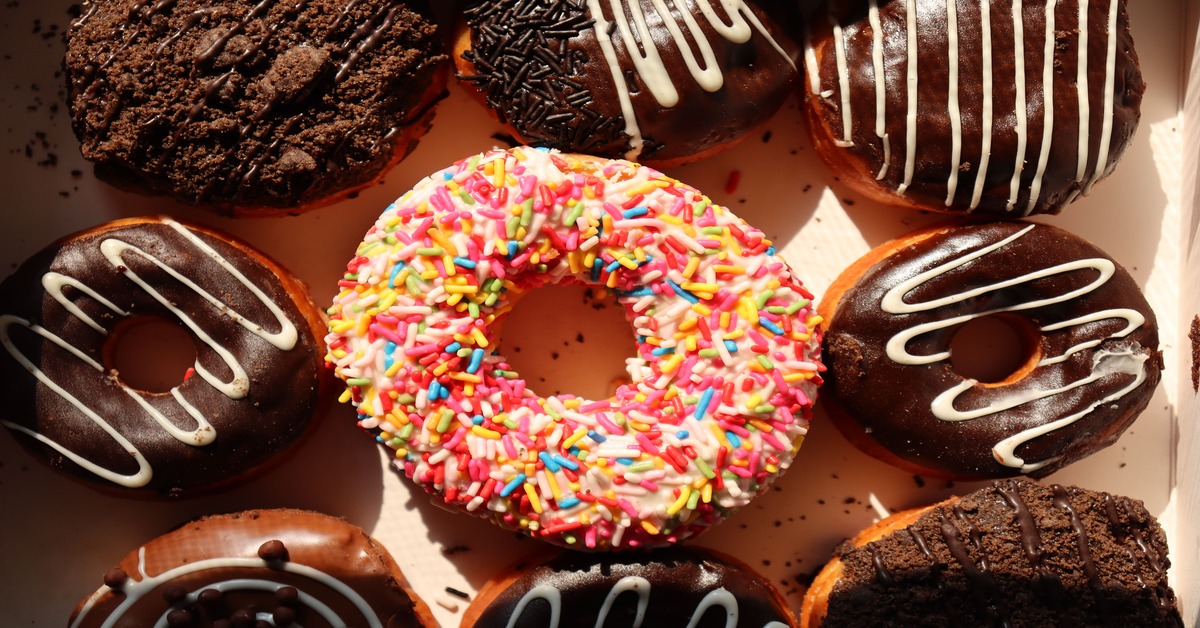
It’s a fair question to ask how Tim Hortons donuts stack up against donuts from other popular coffee and donut chains. Generally speaking, Tim Hortons donuts tend to sit in a fairly moderate calorie range compared to some competitors, particularly for classic flavors like the honey dip or plain glazed.
Specialty donuts across most major chains, including Tim Hortons, tend to be the biggest calorie contributors, mostly because of heavier toppings, multiple fillings, or drizzle combinations.
The takeaway here isn’t that one chain is dramatically better or worse than another. It’s that within any donut menu, including Tim Hortons, the classic and plain options are consistently the lighter choices, while loaded specialty items are consistently the heavier ones. That pattern holds true across most donut shops, which makes it a useful general rule of thumb no matter where the craving happens to strike.
Tips for Ordering Smart at the Counter
A few extra habits can make a noticeable difference for anyone visiting Tim Hortons regularly, especially during a busy work week when donut runs become a habit rather than a rare treat.
Look at the menu board before deciding. Many locations display basic nutrition information near the counter or on digital menu boards, and taking a few seconds to glance at it before ordering can prevent an accidental high-calorie choice.
Avoid ordering while hungry. This applies to food shopping in general, but it’s especially true at a donut counter. Ordering on an empty stomach often leads to grabbing two or three items instead of one, simply because everything looks appealing in the moment.
Balance the rest of the day. If a specialty donut is genuinely the craving of the day, balancing it out with lighter meals later can help keep the overall daily intake reasonable without giving up the treat entirely.
Watch add-ons, not just the donut itself. Extra butter, additional cream cheese-style spreads, or a side of hash browns alongside a donut order can quietly push a “light snack” into a much heavier meal than originally planned.
Keep portion sizes in mind with group boxes. Tim Hortons often sells donuts and Timbits in bulk boxes for offices or family gatherings. It’s easy to lose track of how much has been eaten when food is shared from a big box throughout the day, so being mindful of portions in these group settings really does help.
Why This Kind of Breakdown Is Worth Bookmarking
Menus change, seasonal flavors rotate, and recipes get small updates over time, so having a reliable reference point is genuinely useful for repeat visitors.
Rather than relying on memory or guesswork every time a new seasonal donut shows up, checking back on a clear breakdown like this one, or using a dedicated calculator tool, takes the guesswork out of the equation completely.
This is especially helpful for people managing specific goals, like staying within a daily calorie budget, tracking sugar intake for health reasons, or simply trying to build better snack habits without giving up the foods they enjoy. A donut doesn’t have to be the enemy. It just works better as part of a plan rather than a total unknown.
Summary
- Plain donut: ~210 calories — the lowest-calorie regular donut on the menu
- Classic/glazed donuts (honey dip, old fashioned, sour cream): ~260–320 calories
- Filled donuts (Boston cream, maple, jelly, vanilla dip): ~280–330 calories
- Chocolate/iced donuts (chocolate glazed, double chocolate, maple dip): ~260–350 calories
- Specialty/seasonal donuts: ~330–400 calories — the highest-calorie category due to extra toppings and fillings
- Timbits: ~35–60 calories each, but a box of 10 can total 400–500 calories
- Sugar content: roughly 12–20 grams per donut
- Fat content: roughly 10–18 grams per donut
- Key takeaway: classic and plain donuts are the lightest choices; loaded specialty donuts and multiple Timbits add up fastest
Final Thoughts
Tim Hortons donuts are a genuine comfort food for millions of people, and there’s nothing wrong with enjoying one regularly. What this breakdown really shows is that not all donuts are created equal — a plain glazed donut and a loaded specialty donut can differ by 150 calories or more, and that gap is worth knowing about, especially for anyone trying to stay mindful of their daily intake.
The best approach isn’t to avoid donuts altogether but to make informed choices: picking classic options more often, treating specialty donuts as occasional indulgences, watching portion sizes with Timbits, and using reliable tools to check numbers before ordering when it really matters. A little bit of awareness goes a long way, and it doesn’t take the fun out of the experience at all. It just makes the next trip to Tim Hortons a slightly smarter one.