A plain bagel alone is about 290 to 300 calories. After adding cream cheese then it’s closer to 380 to 400. For a loaded breakfast sandwich with a hash brown and sweetened coffee you’re easily pass 900 calories.
For about a year I picked up a Tim Hortons bagel on my way to work most mornings and honestly never gave it a second thought. It’s bread. Nobody’s putting frosting on it.
That was pretty much my entire nutrition philosophy until I started training for a half marathon last spring and decided, mostly out of boredom on a Sunday, to actually log a few days of eating instead of guessing.
My normal order was a toasted plain bagel with cream cheese and a medium coffee with cream. I typed it into a calorie app expecting some small, forgettable number. It said close to 480 calories for the bagel and the cream cheese alone. I sat there for a second trying to figure out if I’d typed something wrong, because in my head a bagel was maybe 200 calories, tops.
Turns out the cream cheese was carrying a lot more weight than I’d ever bothered to think about. I’d basically been eating close to a quarter of my whole day’s calorie budget before 9am and calling it “just a bagel.”
So I spent most amount of time that week reading through nutrition data for every bagel on the Tim Hortons menu, plus the toppings and the loaded breakfast sandwiches, and I figured I’d write down what I found along with the mistakes I made getting there.
What The Bagels Actually Cost You, Calorie-Wise
When I first went looking for this stuff online, the numbers didn’t line up between sites. A plain bagel was 260 calories on one page, 297 on another, 300 somewhere else. It took a while to figure out why. Part of it is that Canadian and US menus aren’t identical. Part of it is whether the number includes any oil from toasting.
And part of it, I’m fairly convinced, is that some of these nutrition databases are just crowdsourced by random users and nobody’s double checking the math. So don’t treat any single number as exact — think of it as a range.
A plain bagel with nothing on it sits around 290 to 300 calories. It’s mostly carb, not much fat, and a decent bit of protein for bread, close to 9 or 10 grams. Also it’s a lot of food for something you can finish in five bites, but I’ve stopped thinking of it as some kind of secret diet killer. It’s just dense.
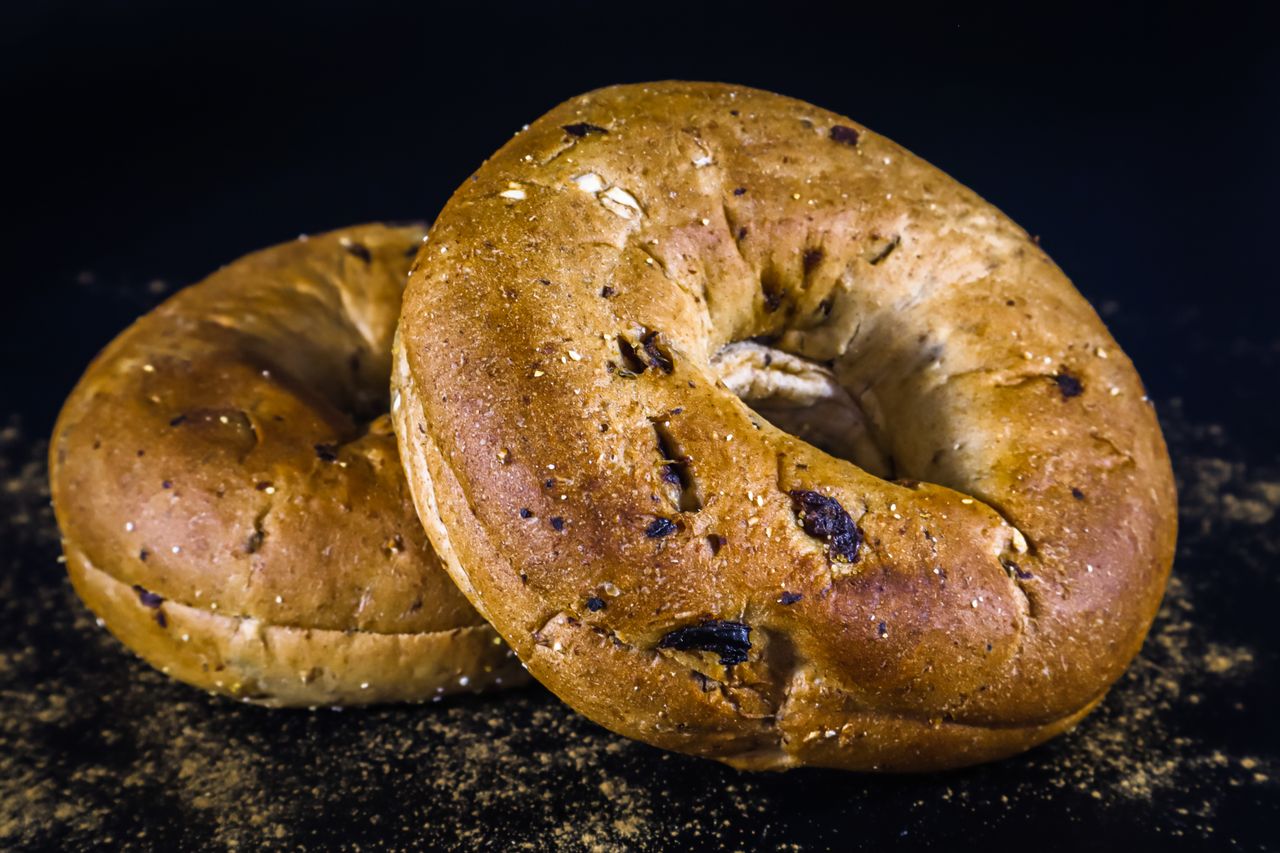
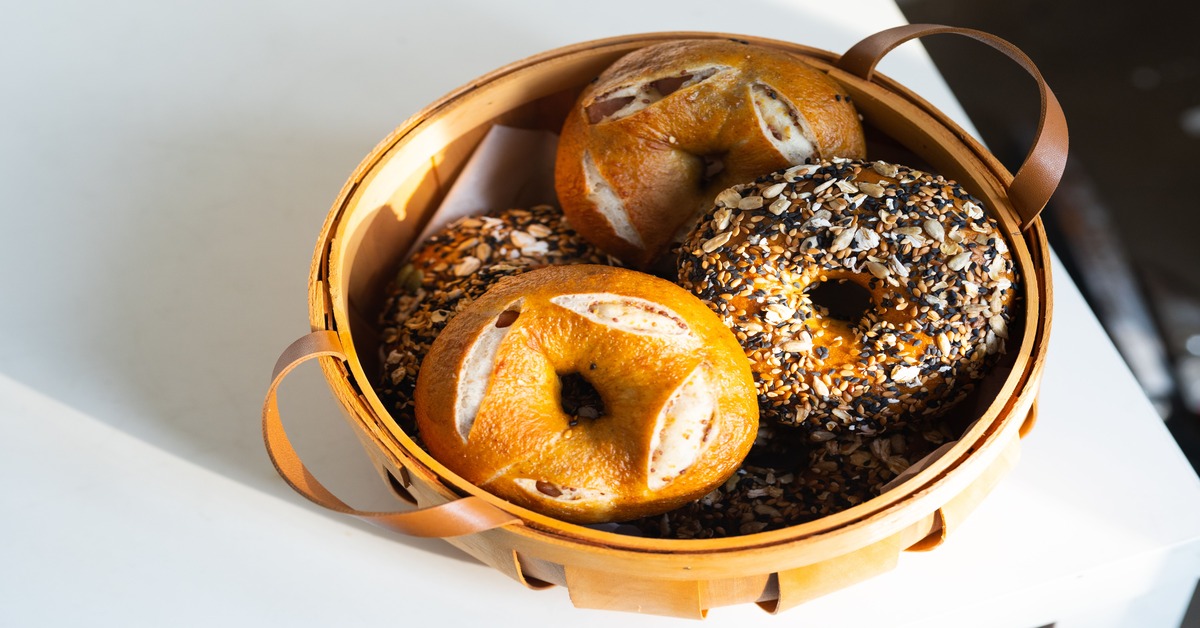
Everything bagel is my usual pick and it lands basically in the same spot as plain, somewhere in the low 300s. I honestly expected the seeds to bump the number up more than they do. They don’t really. Almost all the calories are baked into the dough itself before any seasoning touches it.
Cinnamon raisin tastes sweeter so I assumed it’d be noticeably higher in calories, but it’s not far off from plain either. Where it actually differs is sugar — closer to 10 grams versus 5 or 6 grams for the plain version, because of the raisins.
Twelve grain is a step up, more like 320 to 350 calories, but it also comes with more fiber and protein than the rest of the lineup. If I’m ordering a bagel and actually thinking about it instead of just grabbing whatever, this is usually the one I go with, since it keeps me full a lot longer than the others do.
Four cheese runs around 320 to 330 calories on its own. Adding cream cheese to a bagel that already has cheese baked in is something I’ve done more than once, and it’s a lot.
Jalapeño asiago mozzarella isn’t the calorie outlier, but the sodium on that one is rough, up around 700mg for the bagel by itself. If you’re watching sodium, skip this one or at least don’t pair it with a salty breakfast sandwich too.
So the bagels themselves cluster together more than I expected, mostly somewhere between 290 and 330 calories depending which one. The real story isn’t the bread. It’s what gets put on it.
Where The Real Damage Happens
I spent a long time assuming the bagel was the problem here. It’s not, or at least not by itself. The topping is where things stay reasonable or fall apart completely.
Plain cream cheese adds roughly 90 to 100 calories and around 9 grams of fat for the portion Tim Hortons actually uses, which is bigger than what most people picture when they think “a bit of cream cheese.” A plain bagel with cream cheese, probably the most ordered thing in the store, comes out around 380 to 400 calories total.
Herb and garlic or strawberry cream cheese are close to the same as plain, adding roughly 90 to 100 calories.
Butter is the lightest option they’ve got, somewhere around 60 to 100 calories depending how much they use. If you want something on your bagel without committing to the cream cheese calories, this is the one to pick.
Peanut butter actually runs a bit higher than cream cheese, closer to 110 calories, but you’re getting real protein and better fat for it. I switched to this a few mornings a week during training and it kept me full a lot longer even though the number on paper is slightly worse.
Jam is around 60 calories but almost all of that is sugar, something like 14 grams. Low calorie doesn’t mean it’s a smart choice.
Once any topping is involved you’re generally looking at 350 to 430 calories total. That’s a more honest number for what people are actually eating than the bare bagel figure most of us have stuck in our heads.
The Loaded Sandwiches Are Their Own Category
This is the part that changed how I order more than anything else. I used to grab a loaded breakfast sandwich occasionally, sausage or bacon, egg, cheese, all stacked on a bagel, without thinking much about it beyond “that sounds good.”
A sandwich like that can run 650 to 700 calories by itself. I found a sausage bagel sandwich listed close to 690 calories, and that’s before a hash brown gets added to the tray or the coffee shows up with cream and two sugars stirred in, which was basically my standard order for a while.
Add it all up and you’re at 900 to 1000 calories before lunch has even happened. Not trying to make anyone feel bad about that, since it was my order too more times than I want to count. Just didn’t realize the math until I actually sat down and did it.
Mistakes I Made Along The Way
I figured toasting a bagel didn’t add any calories since you’re not putting a new ingredient on it. Depending on how much butter or oil hits the pan during toasting though, you can pick up a bit extra without realizing. Small number, but it adds up across a week of mornings.
I underestimated the cream cheese portion for way too long too. What gets scooped onto a bagel there is bigger than what most people spread at home, closer to a deli-style amount. If that matters to you, just ask for less. Nobody’s ever pushed back when I’ve asked for a smaller scoop.
Coffee snuck up on me the most. Black coffee is close to zero calories. Add cream and a couple sugars and you’re tacking on another 80 to 150 calories depending on size, and I was tracking my bagel obsessively while completely ignoring that my coffee order was quietly adding almost as much. It wasn’t until I actually checked the calories of coffee for my order that I realized how much of my “bagel budget” was going into the cup next to it.
I also assumed the grainier, more “wholesome” sounding bagels had to be lower calorie. They’re usually not. Twelve grain runs higher than plain, not lower. What you’re actually getting is more fiber and protein, which is worth something, just not calorie savings.
And the mistake I made most often: treating the loaded sandwich like the fast, light option on rushed mornings. It’s fast. It is not light. I was regularly eating more in that five minute drive through order than I would have sitting down and making breakfast at home.
How It Stacks Up Against Other Chains
Once I got into this I got curious whether switching chains would actually help or if I was just picking between different versions of the same problem. A plain bagel from somewhere like Dunkin lands in roughly the same range, high 200s to low 300s. Not much of a win there just from switching where you buy the bagel.
The bigger difference between chains tends to be the spreads and how heavy handed they are with them. Tim Hortons does have a light cream cheese option, which I genuinely didn’t know existed until months into being a regular there. If you want the flavor without the full calorie hit, ask about it.
What actually moves the needle more than the chain you pick is what rides along with the bagel. An easy coffee upgrade, a hash brown sitting right there on the menu. Comparing bagels alone across chains, there’s no dramatic winner. The savings come from how you build the rest of the order.
A Word On Carbs And Sugar
Training for a half marathon made me pay more attention to carbs than I ever had before, and a bagel is genuinely carb heavy before any topping touches it, somewhere in the high 50s to low 60s grams.
For someone running long distances that’s not a bad thing at all, carbs are fuel and a bagel before a long run has worked fine for me plenty of times. If you’re not doing that kind of activity though, it’s a big carb load for one sitting, especially next to a sweetened coffee.
If sugar is what you’re watching, cinnamon raisin is the one to be careful with since it’s noticeably higher than plain or everything.
And if you’re doing low carb or keto, bagels just aren’t going to work, Tim Hortons or anywhere else. Even the lowest carb option there is still close to 60 grams, which is more than some people’s entire daily allowance on a strict plan.
Things People Have Asked Me About This
A few questions kept coming up once I started talking about this with people at work, so I’ll answer them here too instead of leaving them out.
People want to know if a plain bagel is actually healthier than a donut, and calorie wise they’re closer than most people assume. I actually looked up the calories of donuts side by side with the bagels to settle this for myself, and the bagel wins on protein and, depending which one you get, fiber, so it tends to keep you full longer even though the raw calorie gap isn’t as big as you’d think.
Toasting doesn’t change much on its own unless butter or oil gets added during the process, which can quietly bump the number up a bit. Asking for it toasted dry lets you control that yourself.
If you want the lowest calorie order, plain or cinnamon raisin with just butter keeps you around 350 calories total, or skip the topping entirely and stay under 300.
Mini bagels, where a location actually has them, are one of the easiest ways to cut calories without changing anything about what you’re eating. You’re just eating less of the same thing. I wish more stores made that option easier to find instead of something you have to specifically ask about.
What I Actually Order Now
I never stopped getting Tim Hortons bagels. I still get one more morning I’m out. What changed is just the specifics of the order.
On days I want something that’ll actually keep me full I get twelve grains with peanut butter. On lighter days it’s plain or everything, toasted, with a thin scrape of cream cheese or just butter, and I cut my coffee back to one sugar instead of two.
If I want the loaded sandwich I still get it, but I treat it as the whole meal instead of a quick bite, and I skip the hash brown and sweetened drink I used to automatically add alongside it.
The other habit that stuck was just asking about the cream cheese portion. Small thing, but it adds up over a few mornings a week.
What Changed On The Running Side Of Things
Since this whole thing started because of half marathon training, I’ll add the part I left out. Once I switched my go-to order to the twelve grain with peanut butter on training days, my long runs actually felt different. Not dramatically, but noticeably.
I wasn’t crashing around mile eight the way I used to on days I’d had the plain bagel and cream cheese combo a few hours earlier. My guess, and it’s just a guess, is the extra fiber and protein slowed things down in a way that kept my energy more level instead of spiking and dropping.
That’s not a scientific claim, just what I noticed over a few months of paying attention. I also started eating breakfast earlier on run days, giving myself closer to two hours before heading out instead of forty five minutes, which probably matters more than which bagel I picked. But the bagel choice was the piece I could actually control at 6am half asleep in a drive through line, so it’s the one I paid the most attention to.
My running coach, when I mentioned all this to her, basically said the same thing nutritionists usually say: the specific bagel matters less than people think, and what matters more is not skipping breakfast entirely and not eating something so heavy in fat and sugar that it sits in your stomach for the first three miles.
The loaded breakfast sandwiches, with all that sausage and cheese, are exactly the kind of thing she meant. Good on a lazy Sunday morning, bad idea two hours before a ten mile run.
A Few Things Worth Doing
Pick the bagel based on how full it keeps you rather than how healthy the name sounds, since twelve grain wins there even though it’s not the lowest calorie pick.
- Ask for less cream cheese if you’re getting any at all. The standard portion is bigger than most people picture.
- Try peanut butter instead of cream cheese on days you want something more filling. Costs a few more calories but the protein makes up for it.
- Pay attention to the coffee order too, not just the food. Cream and sugar add up fast without you touching the actual bagel.
- If you’re getting a loaded sandwich, count it as the full breakfast instead of pairing it with a hash brown and a large sweetened coffee.
Don’t take any single number online as gospel. I found real differences between sources for the exact same bagel, so treat these as solid estimates and check the company’s own nutrition page if you want numbers specific to your country.
Final Thoughts
None of this is really an argument for giving up Tim Hortons bagels. I still get one more morning I’m running around, no guilt about it most of the time. The difference now is that I actually know what I’m eating instead of guessing at it.
A plain bagel by itself is fine, sitting around 290 to 300 calories, but the second cream cheese or a full breakfast sandwich gets involved, that number can more than double without you noticing, especially with coffee and a hash brown thrown in too.
If you’re someone who grabs a bagel a few times a week, it’s worth actually checking the numbers once instead of assuming, the same way I did on that random Sunday.
I still order the loaded sandwich sometimes because I’m hungry and I want it, and that’s fine. I just stopped pretending it’s the light option, because it isn’t.
FAQs
1. How many calories are in a plain Tim Hortons bagel?
A plain bagel on its own runs about 290 calories, with roughly 59 grams of carbs and 9 to 10 grams of protein. That’s before any butter or cream cheese is added.
2. How many calories are in a Tim Hortons bagel with cream cheese?
Add the standard scoop of cream cheese and you’re looking at around 380 to 400 calories total, since the spread alone adds 90 to 100 calories.
3. What is the lowest-calorie bagel at Tim Hortons?
The Onion Bagel and Plain Bagel are among the lightest options, both sitting around 260 to 290 calories, noticeably less than the Twelve Grain or Four Cheese varieties.
4. How many calories are in a Tim Hortons loaded breakfast bagel sandwich?
A loaded sandwich like the Bagel B.E.L.T. or a sausage, egg, and cheese bagel typically runs 440 to 700 calories, depending on the protein and cheese used.
5. Are Tim Hortons bagels healthy?
They’re not unhealthy on their own — a plain bagel offers real protein and carbs for energy — but the toppings and combos (cream cheese, breakfast sandwiches, sweetened coffee) are usually what push a “quick breakfast” well past 900 calories.