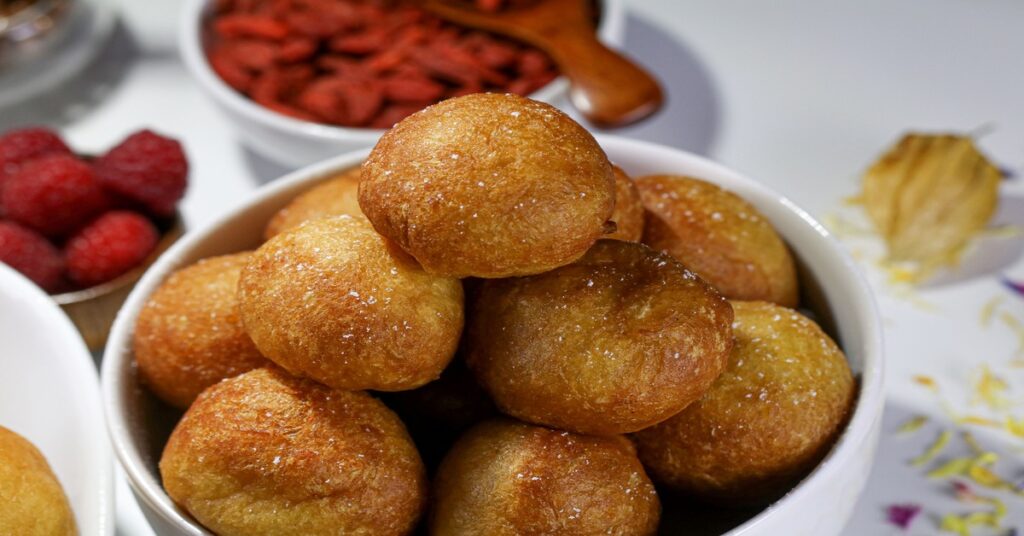
A Tim Hortons Timbit contains 50 to 90 calories, depending on flavor. Yeast-based varieties like Honey Dip and Strawberry are lowest at around 50 calories; cake-based varieties like Sour Cream Glazed and Birthday Cake are highest at 80-90 calories. A mixed 10-pack totals roughly 650-750 calories.
My son played house league hockey for three years, and I somehow ended up in charge of concessions for most of it. Every Saturday, 6:45 in the morning, I’d be standing at the Tim Hortons counter trying to figure out what would get a rink full of tired eight-year-olds and their even more tired parents through the next couple hours.
Nine times out of ten that meant Timbits. Big boxes of them. Nobody ever asked for them by name, they just became the default, the thing that showed up every week and disappeared just as fast.
I started noticing things after a while. The same three dads went straight for Sour Cream Glazed every single time and left nothing behind. The kids treated Birthday Cake like it was some kind of currency, trading and hoarding them.
And me, standing there with the box, doing math in my head I hadn’t asked to do — how much of this stuff was actually going into a bunch of people before eight in the morning.
Honestly there wasn’t one big moment where I decided to figure this out. It built up slowly, over three winters of handing out donut holes, until I finally sat down and actually looked at the nutrition numbers instead of guessing.
I cross-checked what I found against the Tim Hortons app, paid attention to which flavors people grabbed first versus which ones sat in the box until they went stale, and kept notes on it in a way that probably says more about me than about Timbits. Anyway, here’s what I learned, flavor by flavor, plus the parts I got wrong.
Quick Reality Check Before We Get Into It
A single Timbit lands somewhere between 50 and 90 calories, depending on the flavor. That range matters more than people think. It’s the difference between a “light” 10-pack and a “heavy” one being a couple hundred calories apart, which is basically a whole extra meal’s worth of sugar just from which flavors happened to end up in the box.
Here’s the general shape of it. The lighter, airier ones like Honey Dip sit toward the bottom, usually 50 to 60 calories. The denser, richer ones, more like a muffin top than a donut, run 70 to 90 calories, especially anything with sour cream or coconut in the name.
Tim Hortons updates its menu and nutrition info now and then, and numbers can shift slightly by region, so I’d treat these as the ballpark I’ve seen consistently rather than something carved in stone. If you want the exact figure for your location, the app has a nutrition calculator that’s honestly pretty solid. I use it more than I’d like to admit.
The Full Flavor Ranking, Lowest to Highest Calories
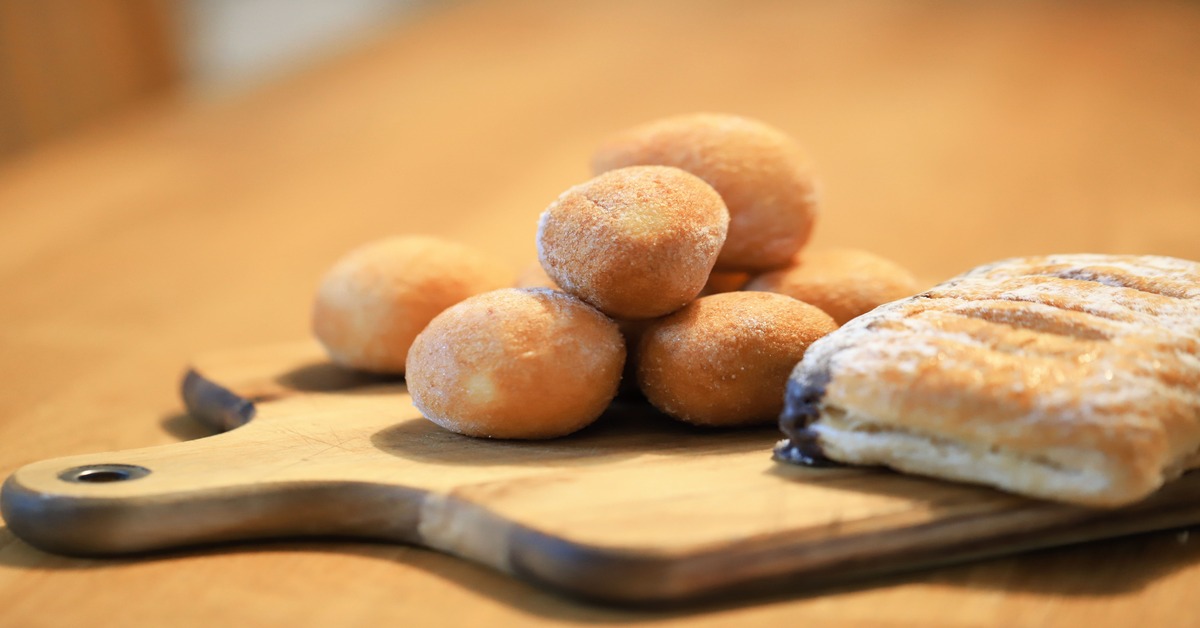
I’m going in roughly the order I’d want a nervous first-time ordered to hear it: start light, work your way up to the stuff that’s basically dessert.
Honey Dip is where I always tell people to start if they’re trying to be reasonable about it. Soft yeast dough, thin glaze, nothing fancy, around 50 calories a piece.
It’s also just good, which sounds like a weird thing to say about a “safe” choice, but it doesn’t need to be dressed up to work. Think of it as the black coffee of the Timbit world. Boring in a reliable way.
Strawberry filled actually surprised me the first time I looked into it. I assumed the filling would push the calories up, but it lands right around 50 too. Turns out fruit filling isn’t as calorie-dense as the dough and glaze surrounding it, so it doesn’t move the needle much.
Venetian Cream sits in that same range and flies under the radar more than it should — if you want “cream filled” without fully committing to dessert territory, that’s your move. When I’m ordering for a group and want to look responsible while still enjoying myself, these three are what I load the box with.
Somewhere in the 60 to 70 calorie range you’ve got Chocolate Glazed, which is what gets ordered the most whenever I’m buying for the office. Slightly denser than Honey Dip, chocolate coating, satisfying without going overboard.
Old Fashioned Plain and its glazed cousin live around here too, with a bit more of a cake-like, crumbly texture. I ignored these for years because “plain” sounded boring, and I was wrong — they’re good with coffee, not overly sweet.
Whatever seasonal specialty flavor happens to be rotating through, like a cookie dough variety, tends to land somewhere in this zone as well, though it varies more since the recipes change.
Then things start climbing. Apple Fritter gets people every time because it doesn’t look small — it’s already a bigger, denser Timbit before you even bite into it, usually up around 70 to 80 calories.
I used to grab two of these thinking I was being moderate, then realize I’d basically eaten a full donut’s worth of calories in “just two bites.” Blueberries sneak up on people in a similar way. It looks innocent, it’s fruit after all, but it’s a cake-based Timbit underneath, and those run heavier across the board no matter what fruit is involved.
At the top of the range you’re looking at Sour Cream Glazed, which in my experience is consistently the highest or close to it, usually sitting around 80 to 90 calories.
It’s also, annoyingly, one of the tastiest — dense, rich, a slightly tangy dough that basically eats like a mini cake donut. Toasted Coconut and Chocolate Toasted Coconut are right up there with it, since the coconut adds fat and the chocolate coating stacks more on top.
I’ve learned to treat those two as actual treats rather than something to casually eat with coffee. And then there’s Birthday Cake, which deserves its own mention less for raw calories and more for sugar — it’s close to double some of the other flavors per piece.
If you’ve ever had one and felt a little jittery twenty minutes later, that’s why. It’s a funfetti cake in donut-hole form, and it tastes exactly like you’d expect: incredible, and a little dangerous.
The Flavor Ranking as a Quick-Glance Table
I know not everyone wants to read paragraphs to find one number, so here’s the cheat sheet version of everything above. These are the approximate calories per single Timbit, based on what I’ve consistently seen across the classic lineup:
| Flavor | Approx. Calories | Type | My Honest Take |
| Honey Dip | ~50 | Yeast | The safe default, always good |
| Strawberry Filled | ~50 | Yeast | Lighter than it looks |
| Venetian Cream | ~50 | Yeast | Underrated, tastes richer than the count suggests |
| Old Fashioned Plain | ~60 | Cake | Grew on me over time |
| Old Fashioned Glazed | ~65 | Cake | Slightly sweeter version of the plain |
| Chocolate Glazed | ~65-70 | Yeast | The office favorite, no contest |
| Apple Fritter | ~75-80 | Cake | Deceptively big for a “Timbit” |
| Blueberry | ~75-80 | Cake | Looks innocent, isn’t |
| Sour Cream Glazed | ~80-90 | Cake | Richest of the “classic” flavors |
| Toasted Coconut | ~85-90 | Cake | Treat-tier, not snack-tier |
| Chocolate Toasted Coconut | ~85-90 | Cake | Same as above, plus chocolate |
| Birthday Cake | ~70-80 (highest sugar) | Cake | Sugar bomb, worth it occasionally |
A couple of caveats on this table, because I don’t want to oversell precision I don’t actually have: Tim Hortons does tweak recipes and portion sizes over time, seasonal and limited-time flavors (I’m looking at you, pumpkin spice ones that show up every fall) aren’t always listed the same way twice, and numbers can vary slightly by country since the Canadian and U.S. menus don’t always match exactly. Think of this table as “what to expect,” not “what’s printed on a lab report.”
Why the Yeast vs. Cake Difference Actually Matters
This took me longer to understand than I’d like to admit, but once it clicked, the whole ranking made a lot more sense. Timbits come from two different dough bases, yeast-raised and cake-style, and that single distinction explains most of the calorie spread on this list better than the flavor names do.
Yeast-based Timbits, think Honey Dip, Strawberry, Venetian Cream, Chocolate Glazed, are lighter and airier. There’s more air pocketed into the dough as it rises, so there’s less actual “stuff” packed into the same bite-sized piece. That’s why these tend to cluster at the bottom of the range.
Cake-based Timbits (Sour Cream Glazed, Old Fashioned, Blueberry, the coconut ones, Birthday Cake) are denser by nature. There’s no rising and proofing step the same way; it’s closer to a scooped cake batter that gets fried. Same size, more mass, more calories. This also seems to be why cake-based Timbits feel more filling per piece. I genuinely feel more satisfied after two Sour Cream Glazed than after four Honey Dip, which tracks with the density difference.
Once I started thinking about it this way instead of memorizing individual numbers, ordering got a lot easier. I don’t need to remember that Toasted Coconut is roughly 88 calories. I just need to remember “cake-style, treat it like dessert,” and that gets me close enough.
What a Full Box Actually Costs You
This is where I think most people get blindsided, because nobody actually sits down and does this math before ordering. I didn’t, for years of Saturday rink duty.
A 10-pack of all Honey Dip, the lightest option, lands somewhere around 500 calories total. A 10-pack of all Sour Cream Glazed, the heaviest, can push closer to 800 or 900. That’s not a small gap. That’s the difference between “a snack” and more calories than a full meal at a lot of fast food places.
A typical mixed 10-pack, the kind you get when you just say “surprise me” at the counter, tends to average out somewhere in the 650 to 750 calorie range for the whole box. Worth knowing if you’re the type of person, like me apparently, who can put away an entire box without really noticing.
For office meetings and parties, the 20-pack and 30-pack boxes are obviously popular, and I’ve watched entire conference rooms demolish a 20-pack in under ten minutes without anyone batting an eye. Small pieces just don’t register as real eating.
A mixed 20-pack is roughly double the 10-pack math, so you’re looking at somewhere around 1,300 to 1,500 calories spread across the group, which sounds fine until you remember three people ate five each.
My Honest Rules for Ordering (Learned the Hard Way)
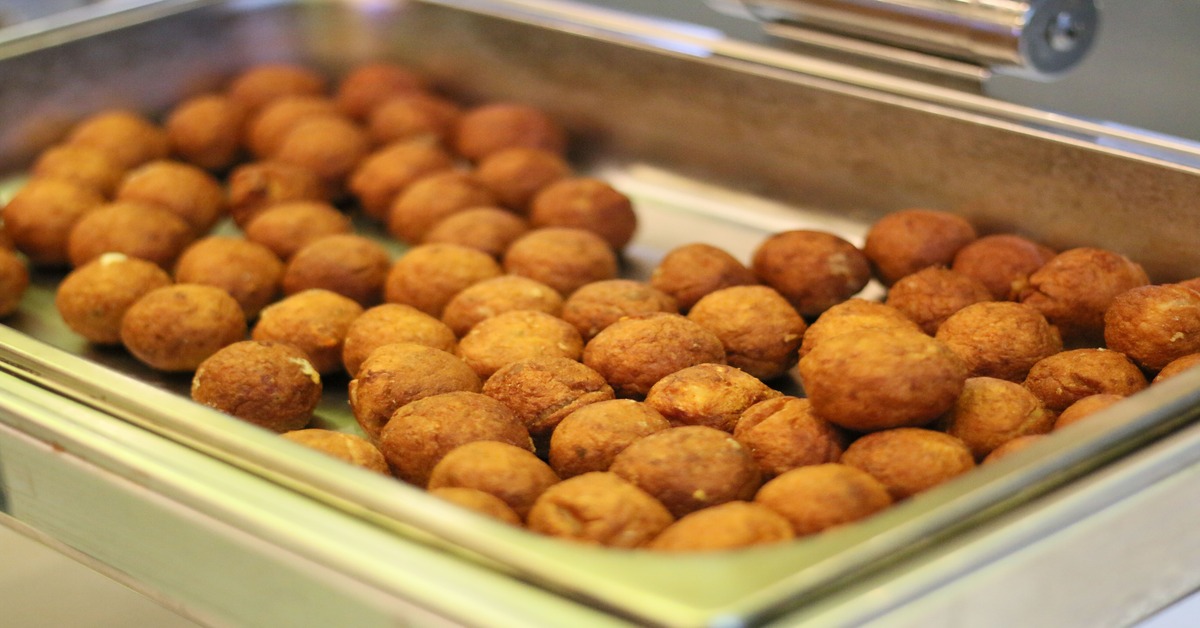
The single biggest thing that’s worked for me is deciding my number before I’m actually in line. Sounds obvious, but if I walk up to the counter without a plan, I default to “just get a 10-pack, it’s basically the same price as buying a few individually.”
When I’ve already decided I’m having four, I actually stick to it, mostly because that decision got made before I was standing there staring at a warm box of donut holes with a kid tugging on my sleeve.
Somewhere along the way I also started leaning on the “3-4 Timbits equals one donut” rule as a gut check. If I wouldn’t order a whole donut for myself right that second, I probably don’t need a fourth Timbit either. It’s a weirdly effective mental trick, because a donut registers as “a thing” in a way that individual Timbits just don’t.
Picking flavors on purpose instead of grabbing randomly out of the mixed box matters more than I expected too. I gravitate toward Honey Dip, Strawberry, and Old Fashioned first now, and save the Sour Cream Glazed and coconut ones for when I actually want a real treat rather than something to nibble on with coffee. Same number of pieces, noticeably fewer calories, just from being a little deliberate about which ones I reach for.
Then there’s the coffee itself, which caught me off guard for longer than I’d like to admit. I’d order a “light” combination of Timbits and feel pretty good about it, then pair it with a large double-double, which on its own can tack on well over 100 calories from the cream and sugar. The Timbits weren’t the problem in that scenario — the coffee I wasn’t even thinking about was doing just as much damage.
And if you’re buying for a group, don’t assume anyone’s going to pace themselves. I ordered a 20-pack once thinking it’d cover two practices. It lasted eleven minutes, and I timed it, because at that point I was genuinely curious.
People don’t ration Timbits the way they’d ration a plate of cookies, because they look like “just a bite” every single time. If portion control actually matters for your group, a smaller box or splitting the order across two visits works a lot better than one big box sitting out the whole time.
Mistakes I’ve Made (So You Don’t Have To)
For a long time I assumed that because Timbits are bite-sized, the calorie count had to be trivial. It’s not nothing. Ounce for ounce, a Timbit is actually denser in calories than most things people think of as snack food, which is basically the opposite of what the size suggests.
You also never decide to eat ten Timbits, not really. You decide to eat one, six different times, and it never adds up in your head until later. I fell into this constantly at the rink — handing them out to kids, then somehow finding sugar on my own fingers every twenty minutes without remembering the moment I grabbed one. Just counting as you go, even loosely, changes the whole thing.
Early on I treated “a mix” as calorie-neutral too, like it didn’t matter which flavors ended up in my hand. It does. The spread between the lightest and heaviest flavor is close to double, so if your box happens to lean Sour Cream Glazed and coconut, you’re eating meaningfully more than someone whose box leaned Honey Dip and Strawberry, even with the exact same piece count.
There’s a mindset trap in there too, treating Timbits as the “healthy-ish” alternative to a full donut. One Timbit does have fewer calories than one donut, sure.
But nobody stops at one. People reach for a handful, and a handful of the richer flavors can easily out-calorie the donut they thought they were avoiding.
And this last one is specific to running concession duty, but I’ll bet it applies more broadly than I think: buying a second box “just in case we run out,” then quietly working through the leftovers of the first box myself while pretending to tidy the snack table. A buffer supply only helps if you’re not also the person guarding it, alone, for two straight hours.
How Timbits Stack Up Against a Full-Sized Donut
Since I brought up the “3-4 Timbits equals one donut” rule earlier, I want to actually walk through why that math holds up, because I was skeptical of it myself at first.
A standard Tim Hortons donut runs somewhere in the 200-300 calorie range depending on the type — a plain glazed on the lower end, something like a Boston Cream or a chocolate-dipped one on the higher end.
A single Timbit, remember, is roughly a quarter to a fifth the size of a full donut in terms of dough volume. Do the math and it lines up surprisingly well: four Honey Dip Timbits land close to one plain glazed donut, while three or four of the richer cake-style ones can match or exceed a heavier donut like a Boston Cream.
What surprised me is that this rule holds up whether you’re comparing light-to-light or heavy-to-heavy, because the same yeast-versus-cake logic applies to full donuts too. A yeast donut is airier and lighter than a cake donut of the same size, just like their Timbit counterparts.
The practical takeaway I use now: If I’m choosing between “one donut” and “a handful of Timbits,” I try to actually picture the handful as the donut it’s replacing, instead of treating it as some separate, smaller category of food. It’s the same treat, just cut into pieces — and somehow psychologically, cutting it into pieces makes it feel like it doesn’t count the same way. It does.
A Few Real-World Comparisons That Helped Me Get Perspective
Sometimes numbers don’t mean much until you compare them to something familiar. A light 10-pack, mostly Honey Dip, Strawberry, and Venetian Cream, lands in roughly the same calorie range as a bagel with cream cheese. A mixed 10-pack is roughly comparable to a fast food value meal in total calories, just without the protein and with a lot more sugar.
And a heavy 10-pack, the kind leaning Sour Cream Glazed and coconut varieties, can add up to as many calories as a full cooked breakfast, eggs, toast, and bacon included, just from donut holes.
That last comparison is the one that actually changed how I order, more than any single number ever did. It’s not that Timbits are “bad,” it’s that it’s genuinely easy to eat a full meal’s worth of them without the meal ever registering as a meal.
Questions People Actually Ask Me About This
Since I became the unofficial “Timbits guy” among the other rink parents — a title I did not seek out, but here we are — a handful of questions come up over and over.
1. Are Timbits actually worse for you than a regular donut?
Not inherently. A single Timbit is always going to have fewer calories than a single donut simply because it’s smaller — the real issue is portion perception. Nobody eats “one Timbit” the way they’d eat “one donut.” The format practically invites multiples, and that’s where the comparison flips against you.
2. Which flavor should I grab if I’m genuinely trying to keep things light?
Honey Dip, Strawberry, or Venetian Cream, in that order. They’re the lowest across the board, they’re yeast-based so the texture’s lighter too, and they happen to be some of the better-tasting options anyway, so you’re not really sacrificing anything to save the calories.
3. Is there a “healthy” Timbit?
I push back a little on that word. These are fried dough with sugar coating, so nothing here qualifies as healthy food by any real definition. If what someone means is “least calorie-dense,” sure, the yeast-based flavors win — but past a certain point, portion size matters more than which flavor you picked.
4. How many Timbits is “too many”?
There’s no universal answer, but I use the same “3-4 Timbits equals one donut” math from earlier as my gut check. Once I’m approaching the calorie equivalent of two or three full donuts in Timbit form, that’s my cue to stop or wrap the rest up. For most people that lands somewhere around six to eight pieces if they’re mixed, fewer if the box is leaning cake-style.
5. Does ordering online change the calorie count?
Not that I’ve noticed. The Timbits themselves don’t change based on how you order — only the packaging and pricing sometimes shift a bit depending on the platform or whatever promotion happens to be running.
6. What about seasonal flavors that aren’t on this list?
My rule of thumb is to assume any limited-time flavor is on the higher end until I’ve actually checked, since they tend to lean toward richer, cake-based recipes to stand out from the regular lineup. Pumpkin spice, holiday flavors, whatever’s rotating through — they usually land closer to Birthday Cake or Sour Cream Glazed territory than to Honey Dip.
So, What Do I Actually Order Now?
These days my go-to is a small mixed order — usually four or five, leaning Honey Dip and Old Fashioned, with maybe one Chocolate Glazed thrown in because I’m not a monster.
If I’m genuinely treating myself, I’ll get one Sour Cream Glazed or a Birthday Cake and actually enjoy it slowly instead of going through it the way I used to at the rink, without really tasting it.
My son’s hockey season ended a while back, but I still end up on Timbits duty now and then — birthdays at work, school events, the occasional Saturday when I just want an excuse to get a box.
And honestly, that’s fine. A Timbit isn’t going to ruin anyone’s week, including mine. The whole point of paying attention to this stuff isn’t to swear off donut holes forever, it’s to stop being the guy standing next to an empty box wondering where two hours and six hundred calories went, the way I did more Saturdays than I’d like to admit that first winter.
If there’s one thing I’d want someone to walk away with, it’s this: Timbits aren’t dangerous, they’re just easy to underestimate because they’re small. A little awareness of which flavors run light versus heavy, and a rough sense of how fast a “few” turns into “the whole box,” goes a long way. Beyond that, honestly — go enjoy them. They’re good. That’s kind of the whole problem.